
The Engare Sero footprints at Lake Natron
The Engare Sero footprints are tracks made by modern humans, Homo sapiens, in volcanic sediment near the lake. A scientific study published in 2020 counted at least 408 human footprints at the site. They show people walking on this ground tens of thousands of years ago at most, and possibly only a few thousand.
A 2020 study dated the layer to between about 5,760 years ago and about 19,100 years ago, with the end of the last ice age (the latest Pleistocene) the most likely age and the earliest Holocene possible.
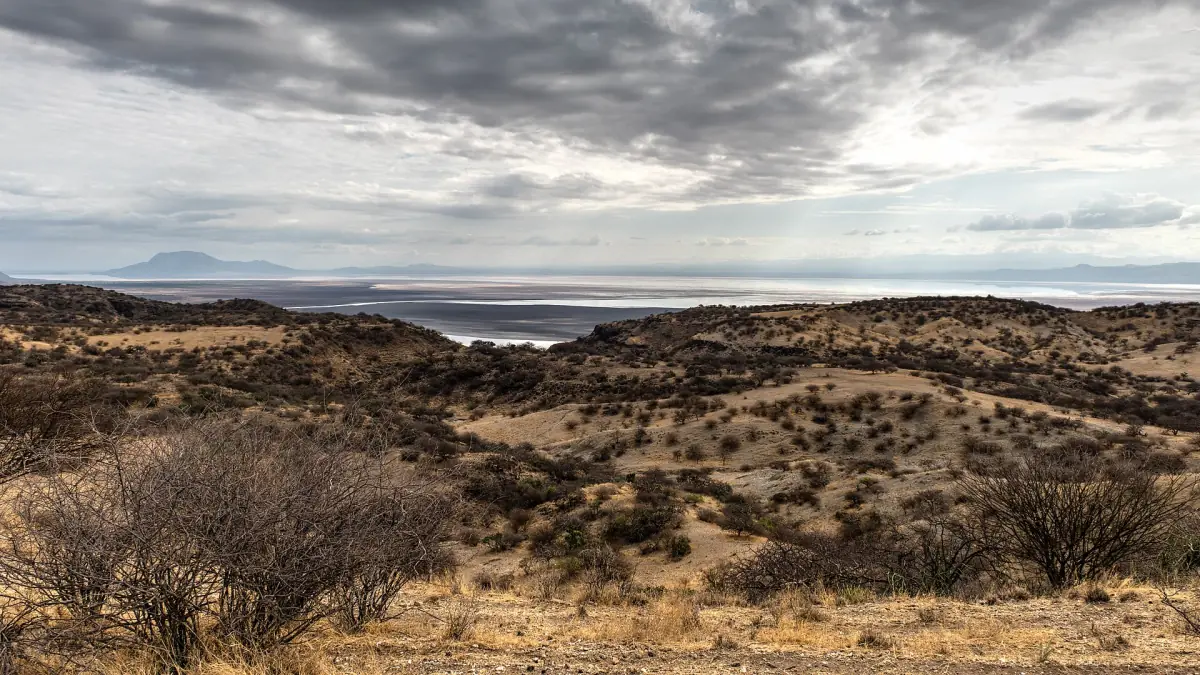
How the footprints were found
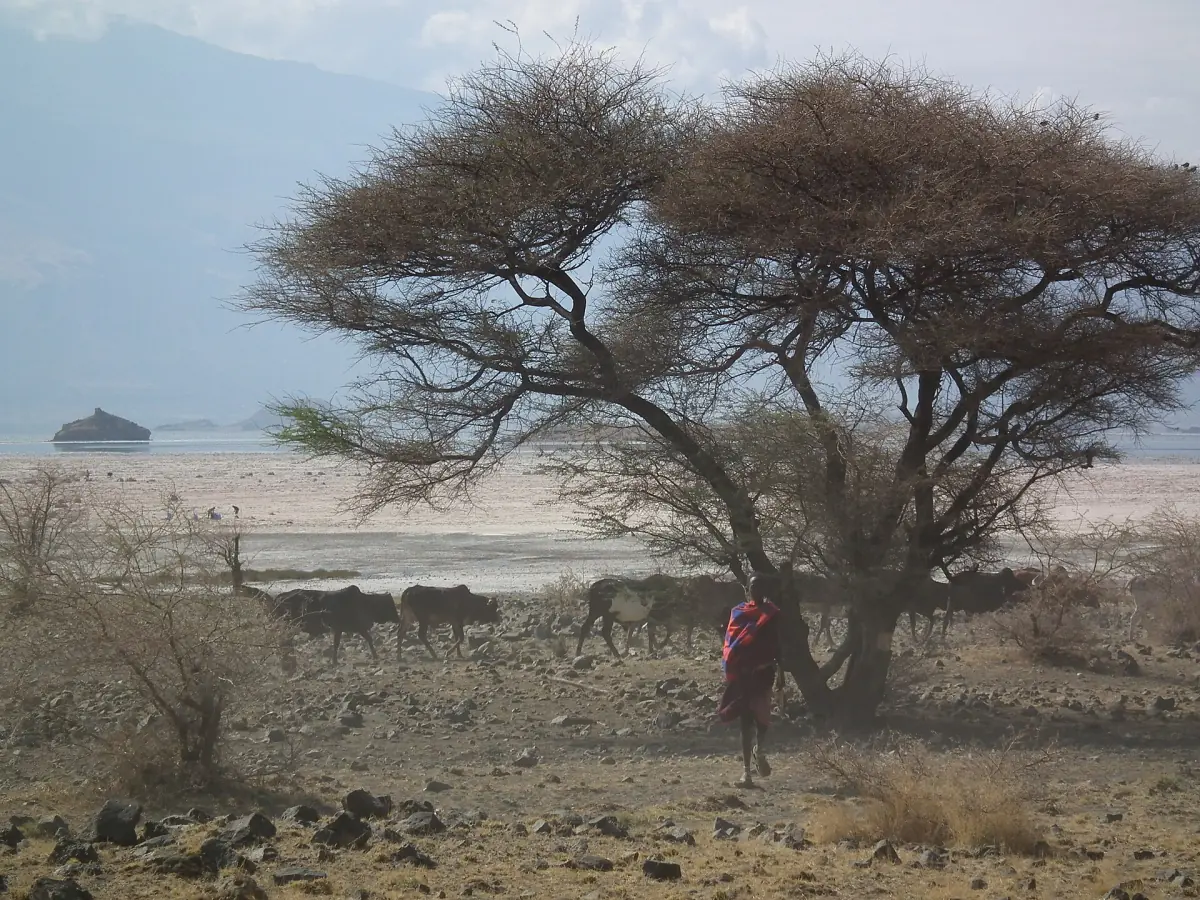
Local Maasai noticed them first.
Local Maasai found the footprints. Researchers were told about them in 2008, a team visited in 2009, and excavations followed from 2009 to 2012. Further uncovering has been paused until a protection plan is in place, because the tracks erode once they are exposed. That is also why a visit is guided and short.
Do not confuse Engare Sero with Laetoli. Laetoli is a separate site and much older, and you can read about it on the Ngorongoro Conservation Area guide. At Engare Sero, the tracks come from modern people, not from an early human ancestor.
Our pick: a day trip to the footprints
A long day from Arusha that stops at the ancient footprints on its way along the lake.
Hand-picked tours, booked through GetYourGuide. Prices are indicative starting prices in US dollars (as of October 2026). Tap a tour for live availability and the current price in your currency.
Lake Natron tours with the footprints
Safaris and multi-day trips in northern Tanzania that include or pass Lake Natron, with live prices and availability.
Visiting the footprints
A short, guided stop.
Guided only
The visit is guided, takes about 30 minutes and is arranged through the camp that manages the area. Do not assume an open or free visit for everyone, and ask your camp whether it is part of your stay.
Where to stand
Stay where your guide tells you to stand and do not walk over the prints. The tracks are fragile and erosion is already a problem.
What you see
The number of prints that are open at the moment can differ from the 2020 count, so do not expect to see all of them.
Combine it
The footprints pair well with the Engare Sero waterfall in a single morning, or with a flamingo walk at sunrise.
Costs and planning
Ask what the price covers.
There is no single official entry price for the footprints that applies to every visitor. A visit is usually part of what a camp offers, and the local charges sit alongside it. Ask whether the footprints are included in your stay or in an activity package, and see the fees page for the cost types. Opening hours are not fixed, so arrange the visit in advance with your guide.
Ask your guide a few questions on the spot: How many prints are open right now? Where is the best place to look without damaging them? How were they found? A short stop works much better when you listen and look calmly instead of photographing quickly and moving on.
If you are interested in the people who live here, the history page explains the Maasai connection to the land around the lake, including the people who first noticed the tracks.
For the road to the lake and the flight option, see getting there.
Engare Sero footprints: frequently asked questions
How old are the Engare Sero footprints?
A 2020 study dated them to about 5,760 to 19,100 years ago, most likely the end of the last ice age.
How many footprints are there?
At least 408 human footprints were counted in the 2020 study. The number you can see today may differ.
Are they the same as the Laetoli footprints?
No. Laetoli is a separate and much older site in the Ngorongoro area.
Can I visit without a guide?
Plan on a guided visit of about 30 minutes arranged through the camp that manages the area.
Can I touch or walk on the footprints?
Stay where your guide tells you to stand. The tracks are fragile and eroding.
Is this the official footprints website?
No. This is an independent travel guide and not connected to any village, authority, camp or tour operator.