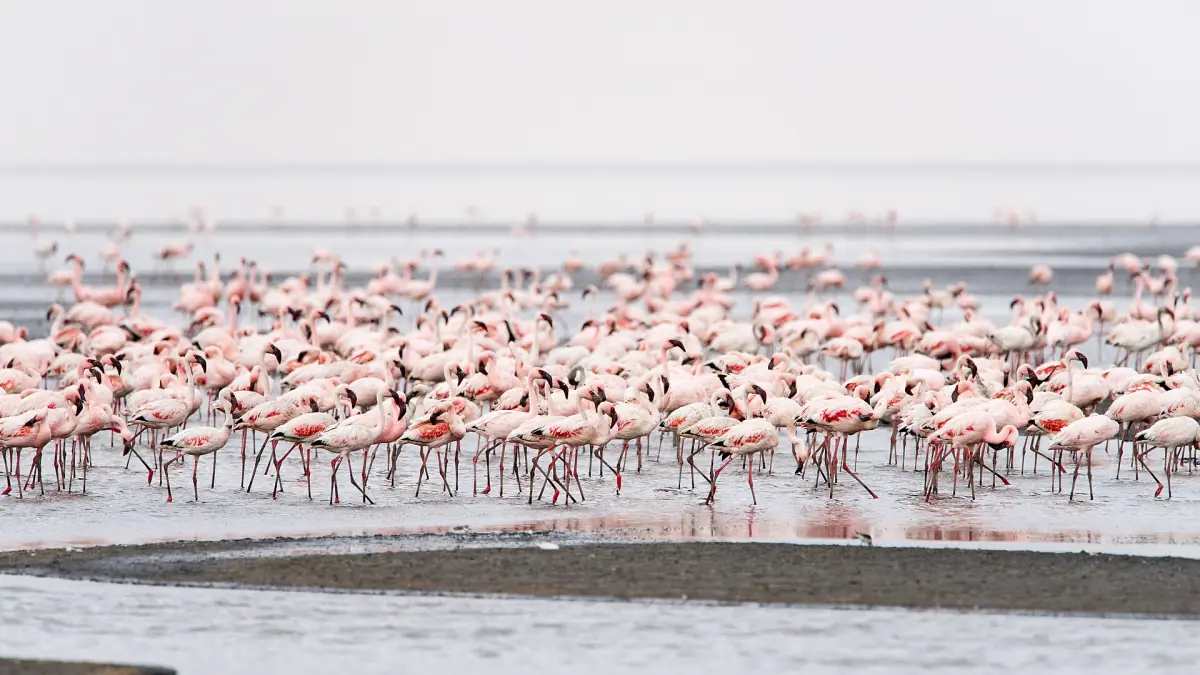
Why lesser flamingos come to Lake Natron
The flamingos of Lake Natron are lesser flamingos, Phoeniconaias minor. The species is classed as Near Threatened, which is not the same as endangered. They feed on cyanobacteria that thrive in the soda water, and Natron is the main regular breeding site for the species in East Africa. An estimated 1.5 to 2.5 million lesser flamingos depend on the region, around 75 percent of the world population.
Treat those figures as the scale of the species and not as a count of birds on the shore on your day. Natron breeds only when conditions allow, and breeding can fail completely in a bad year, so regular does not mean every year. The nesting area is protected by permanent water channels and pools that keep predators away, and it is never open to visitors.
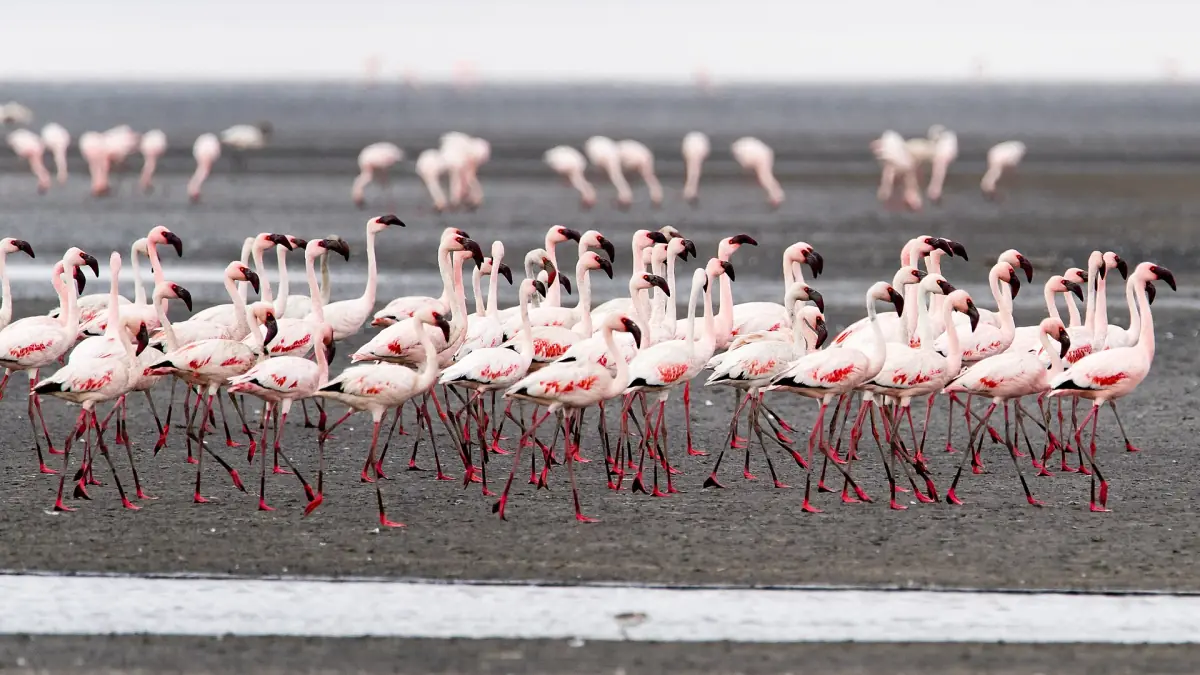
Seeing the flamingos on a guided lake walk
The edge of the soda flats is where you stand.
You see the flamingos on a guided walk along the edge of the soda flats. It runs as a 1 to 4 hour activity and is best at sunrise or sunset, because of the heat. The guide knows where the birds are feeding and how close you can go without disturbing them. Follow the guide and keep a respectful distance.
Do not expect the same scene every day. The birds move around the lake, and there is no promised number on a given morning. If the flamingos are far out, the walk still gives you the white and red soda flats, the shore and the volcano in the distance. The tours page shows how the walk fits into a day with the waterfall and the footprints.
Our pick: a flamingo safari
A 3-day trip with a walk to the flamingos on the Lake Natron shore, with a Maasai guide.
Hand-picked tours, booked through GetYourGuide. Prices are indicative starting prices in US dollars (as of October 2026). Tap a tour for live availability and the current price in your currency.
Lake Natron tours with a flamingo walk
Safaris and multi-day trips in northern Tanzania that include or pass Lake Natron, with live prices and availability.
The red water and why it matters
Color does not tell you where the birds are.
Parts of the lake turn red or pink in shallow salt pans. Salt-loving microorganisms cause the color, and they also tint the salt crust. It is not blood, minerals or lava. The color is a sign of how salty and shallow the water is, but not a guide to flamingo numbers.
Hot springs feed the lake, and the water near some inflows reaches up to 60 degrees Celsius. Fish adapted to the heat live near the springs, so the lake is not lifeless. The lake itself is strongly alkaline, and you should not swim in it. For the stories about animals that look turned to stone, see the animals page.
When to go to see the flamingos
No month is certain.
Time of day
Sunrise and sunset are the best times on the shore. They are cooler, and the heat at midday makes the walk hard.
Breeding years
There is no fixed breeding month that happens every year. Inflow from rivers matters because the lake depends on it in the dry season. Do not plan a trip around a promised breeding event.
Rainy months
In the north, rain falls mainly March to May and October to December. Roads and the stream can flood, so allow extra time. See the weather page.
What else to see
Pair the walk with the Engare Sero waterfall and, if you are fit, the Ol Doinyo Lengai climb.
Lake Manyara is another flamingo lake on the northern circuit. See the Lake Manyara flamingo guide if you plan both lakes.
Lake Natron flamingos: frequently asked questions
How many flamingos are at Lake Natron?
Estimates for the region range from 1.5 to 2.5 million lesser flamingos, around 75 percent of the world population. The number on the shore on your day varies, so there is no fixed count.
Do flamingos breed at Lake Natron every year?
No. Natron is the main regular breeding site in East Africa, but breeding can fail in poor years. Plan your visit without relying on it.
Can I visit the nesting area?
No. The nesting area is protected by permanent water channels and pools, and visitors never go there. You watch the birds from the shore with a guide.
Why is the water red?
Salt-loving microorganisms color shallow salt pans red or pink and tint the salt crust.
What is the best time of day for the walk?
Sunrise or sunset, when it is cooler.
Is this the official Lake Natron website?
No. This is an independent travel guide and not connected to any village, authority, camp or tour operator.