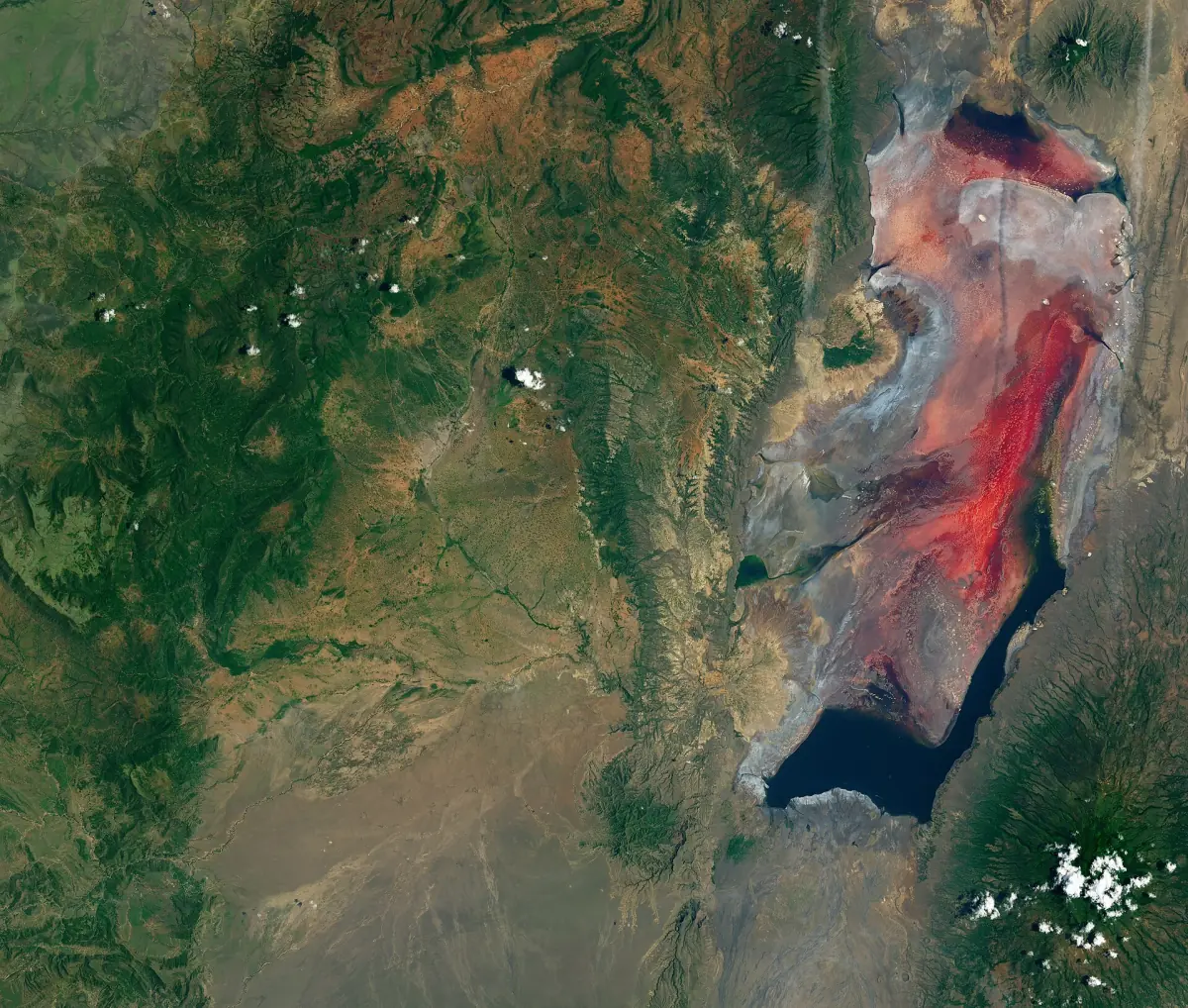
Do animals turn to stone at Lake Natron?
No. The photos that spread around the world show birds and bats that look calcified. The photographer Nick Brandt collected dead animals along the shore and arranged them for pictures taken between 2010 and 2012. They appeared in his book Across the Ravaged Land in 2013. The bodies did not die in those poses. Salt from the water can coat a body and preserve it, but that is not instant petrification at the touch of the water.
The lake itself is more interesting than the myth. It is a red soda lake with hot springs, salt-loving microbes and lesser flamingos. If you want to see it, a guided lake walk and the Lake Natron tours are the usual ways in. This page explains the chemistry first.
Our pick: a Lake Natron day trip
A day on the shore of the lake with a Maasai guide, to see the water and the birds for yourself.
Hand-picked tours, booked through GetYourGuide. Prices are indicative starting prices in US dollars (as of October 2026). Tap a tour for live availability and the current price in your currency.
Lake Natron tours and safaris
Tours and safaris in northern Tanzania that you can combine with Lake Natron, with live prices and availability.
Why is Lake Natron red?
The colour comes from life, not from blood or lava.
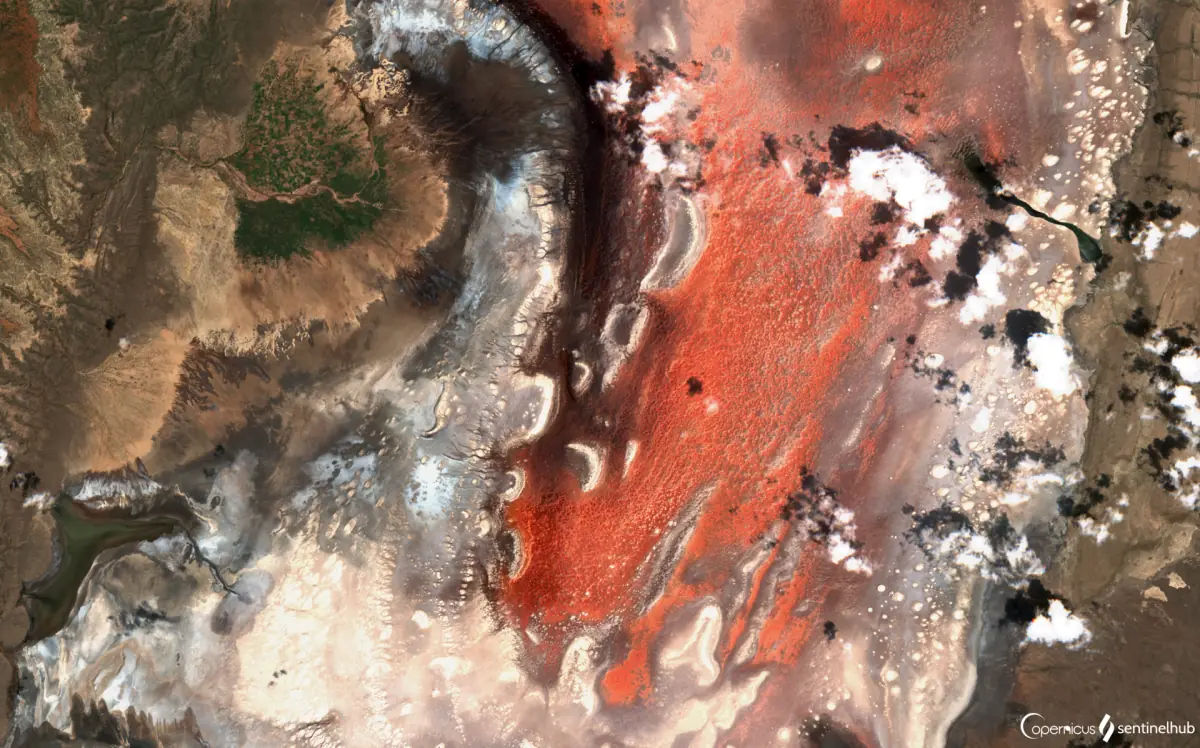
In shallow salt pans, salt-loving microorganisms called haloarchaea bloom and can turn the water pink to red. White crusts of soda and salt form next to them. Satellite images show the red and white patchwork clearly. The colour is not blood, not the volcano and not a mineral dye alone. It also says nothing about how many flamingos are there on a given day.
Lake Natron pH and soda chemistry
Strongly alkaline, shaped by volcanic carbonates.
Lake Natron is a soda lake. Carbonates from the volcanic rock of the region give the water a strongly alkaline chemistry. What matters for visitors is simple: the water is strongly alkaline, so this is not a swimming lake and you should not wade into it. Swimming is offered at the Engare Sero waterfall instead. See the waterfall page.
Is the lake dead?
No, it supports specialised life.
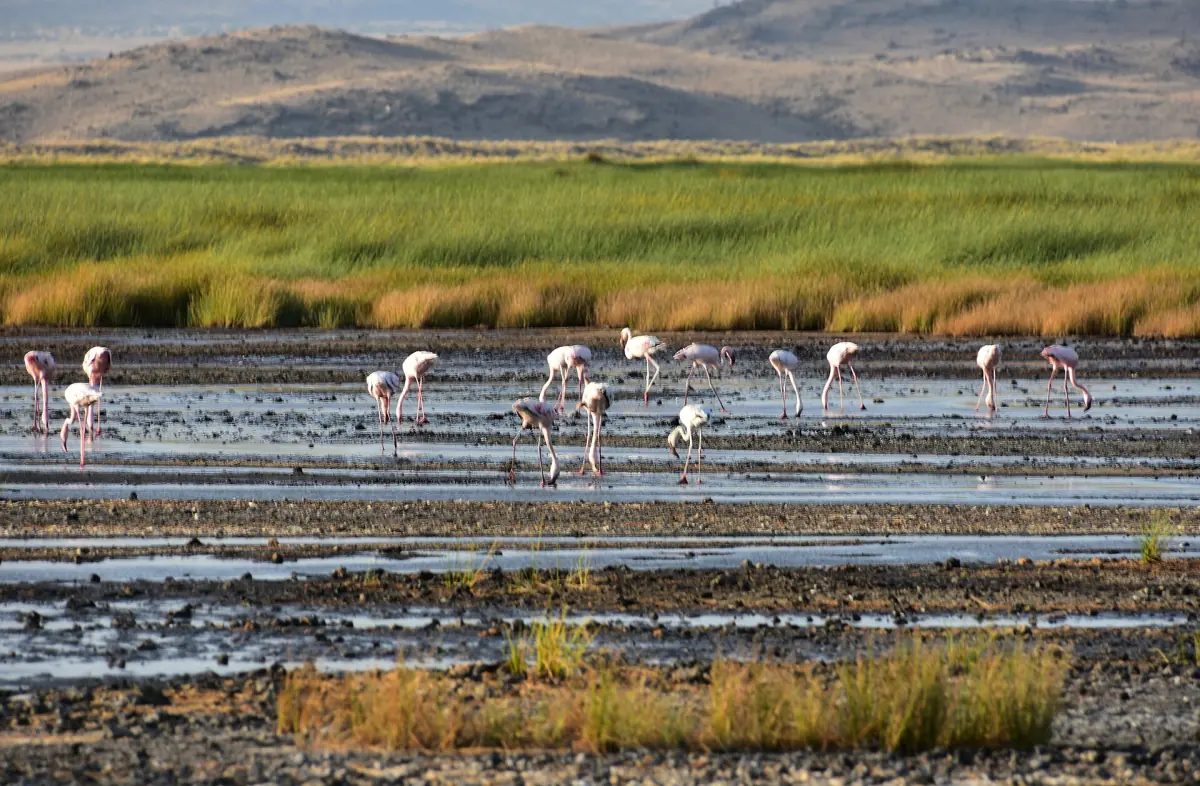
Fish adapted to the conditions live where hot springs flow into the lake. Where underground water is heated, the inflow can reach 60 °C. Lesser flamingos use the lake and feed on cyanobacteria. The idea of a lifeless lake is wrong. For the birds, their breeding area and when to go, read the flamingo page.
Why did the animals die?
Two explanations, neither covers every animal.
One explanation is that the coating is a crust of sodium carbonate and bicarbonate, not true calcification, and that natural causes of death are possible. Another is that birds collide with the lake because its surface looks like a mirror. Neither explains every animal.
| Claim | What is known |
|---|---|
| Animals turn to stone in seconds | No. Salt can coat and preserve a body, but not in an instant. |
| The animals died in these poses | No. They were collected on the shore and arranged for the photos. |
| The lake is dead | No. Heat-adapted fish and lesser flamingos use it. |
| The red colour is blood or lava | No. Salt-loving microbes colour shallow pans. |
For most visitors, the better plan is a lake walk at sunrise or sunset, when it is cooler, and a visit to the volcano or the waterfall.
Lake Natron animals: frequently asked questions
Does Lake Natron really turn animals to stone?
No. The photos show dead animals that were collected and arranged. Salt can coat a body, but this is not instant petrification.
Why is Lake Natron red?
Salt-loving microorganisms bloom in the shallow pans and colour the water pink to red.
Can anything live in Lake Natron?
Yes. Fish adapted to the heat live where hot springs flow in, and lesser flamingos feed on cyanobacteria in the lake.
Can I swim in Lake Natron?
No. It is a strongly alkaline soda lake. Swimming is offered only at the Engare Sero waterfall, and you should ask your guide about the water level first.
How hot is the water?
It reaches up to 60 °C where heated underground water flows in. That figure applies to the inflows, not to the whole lake or to the air.